
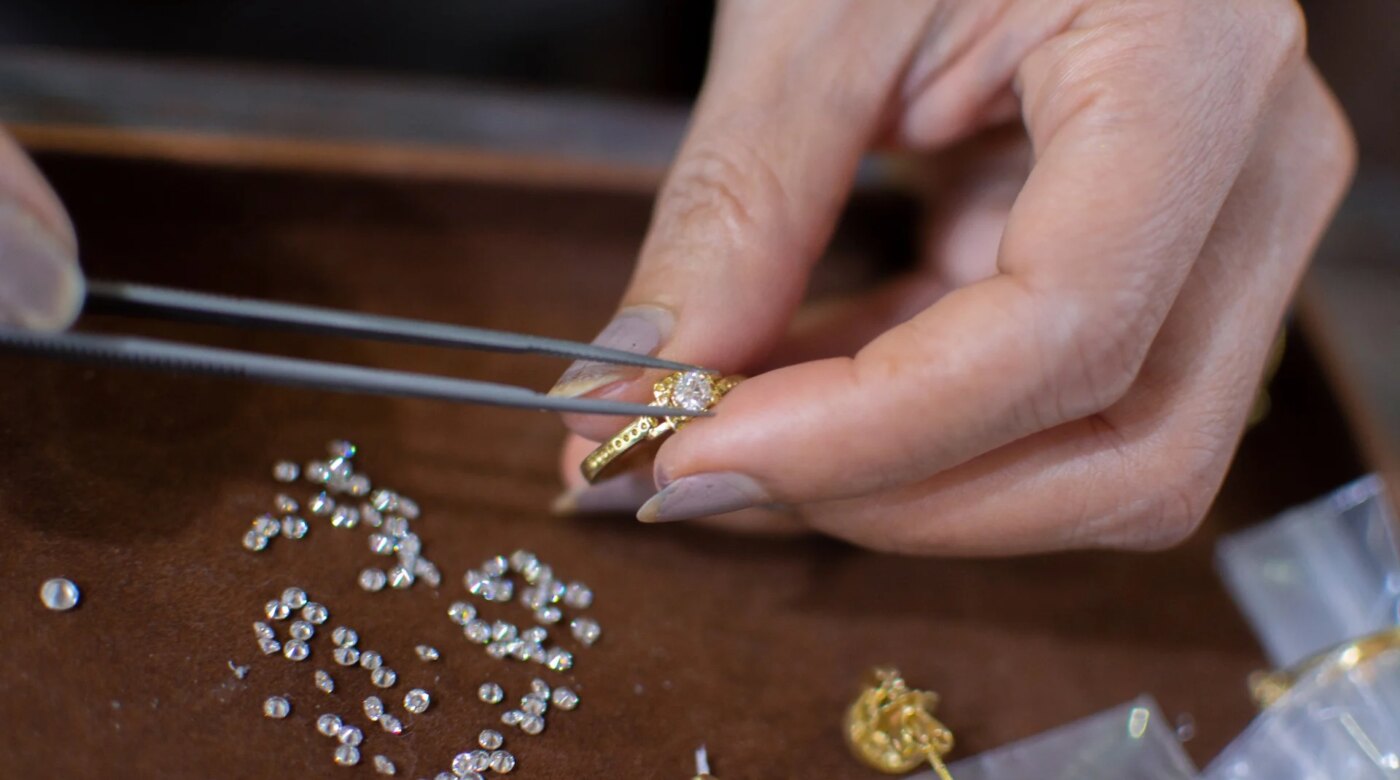
Greek jewellery sales are heading for a decline of at least 15% in 2026, according to Petros Kalpakidis, president of the Panhellenic Federation of Silversmiths, Goldsmiths, Jewellers and Watchmakers (POVAKO) and the Thessaloniki Jewellers and Watchmakers Association, who spoke to Naftemporiki.
Kalpakidis described 2026 as a difficult year for the sector, citing energy costs, the exceptionally high price of gold, competition from neighbouring countries and the continued imposition of a 10% luxury tax on jewellery worth €1,000 or more. Household incomes are also being squeezed by rising energy bills and the broader cost-of-living crisis.
At the same time, inbound tourism in many areas, particularly northern Greece, is generating relatively little spending power. Visitors from neighbouring Balkan countries account for a large share of arrivals but often cannot afford to buy gold jewellery.
Another problem for the sector, according to POVAKO, is the requirement to pay VAT upfront on raw materials.
The way the luxury tax is applied places Greek manufacturers in a particular difficult situation, the federation argued. Domestic producers must pay the tax on a much higher value — based on wholesale or retail prices — than importers, who pay tax calculated on the acquisition cost of the goods.
The luxury tax also undermines the competitiveness of Greek jewellery compared with products sold in neighbouring markets, where neither this tax nor levies on raw materials such as gold, silver, precious stones and semi-precious stones apply.
POVAKO is calling for the abolition of upfront VAT payments on raw materials, a requirement that does not apply in neighbouring countries such as Cyprus and Italy. It is also seeking the abolition of the luxury tax, a measure introduced during Greece’s bailout programmes which has proved highly detrimental to the development of the domestic jewellery industry.
Anastasia Argyrou, president of the Rhodes Silversmiths and Goldsmiths Association, highlighted two additional concerns in comments to Naftemporiki: cruise lines directing passengers to buy jewellery in Turkey, and competition from museum shops.
The latter, she noted, no longer restrict themselves to selling replicas of exhibits but also stock products that are available in retail shops.
She also raised concerns over the tax arrangements, particularly VAT, governing the museum shops. These include 27 outlets operated by the Organisation for the Management and Development of Cultural Resources (ODAP), which were recently awarded to a private company following a tender.
40th KOSMIMA
The 40th KOSMIMA exhibition, organised by TIF-Helexpo with the support of POVAKO, will run from October 17 to October 19 with exhibitor participation up 10% this year.
A total of 73 exhibitors from Greece, Turkey, Estonia and Bulgaria will take part in this year’s event.
Προτιμώμενη πηγή στην Google
Για να εμφανίζονται περισσότερα άρθρα της Ναυτεμπορικής στις αναζητήσεις σας εύκολα και γρήγορα, πρέπει να προσθέσετε το site στις προτιμώμενες πηγές σας. Μπορείτε να το κάνετε πηγαίνοντας εδώ.