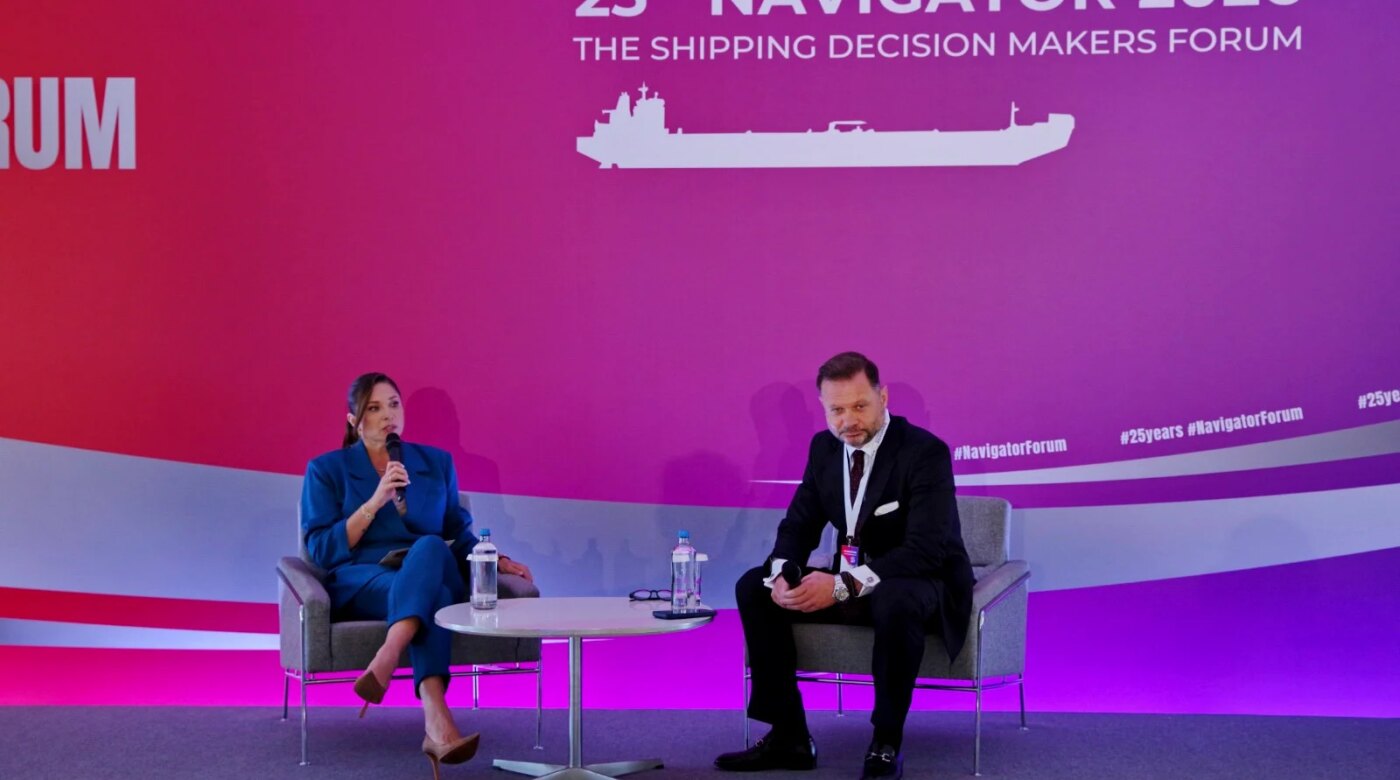
Speaking with Danai Bezantakou, chief executive of Navigator Shipping Consultants, he stressed that Greek shipyards had definitively moved beyond survival into a period of growth and prosperity.
“We are no longer in the phase of survival and revival. We are in the phase of growth and prosperity,” he said.
Xenokostas noted that nothing was operational in Syros in 2018–2019 and in Elefsina in 2022–2023, while no investment had been made for 25 years. The two shipyards had 1,200 employees who were owed years of unpaid wages.
“What changed in Syros and Elefsina was that we decided not to be, as shipyards and as a country, the product of what had happened to us, but of what we deserve,” he said. “We did not wait for someone to help us. We invested.”
Private investment in the two shipyards has now exceeded $130 million. In addition, under the approved restructuring plan, €52 million has been secured and is being paid to cover outstanding wages owed to employees at the Syros and Elefsina facilities.
By the end of 2026, the Group is expected to reach the milestone of having serviced 1,000 vessels at its facilities.
“We are very proud that Greek shipowners trust us and bring their vessels to our shipyards. And because they trust us, a young person in Syros, Elefsina or Piraeus now has the option of working in their own country,” he said.
What ‘strategic security’ means for shipowners today
At the heart of his remarks was what Greek shipowners are seeking more than ever today: strategic security.
“What shipowners gain today, and for the future, is something extremely important. We call it strategic security. Your vessel is at a safe shipyard here, and you know that everything will go well,” he stressed.
As he explained, this security rests on two pillars: the stable European institutional framework, given Greece’s membership of the European Union, and the international credibility the Group has built through long-standing cooperation with international financing institutions such as the US International Development Finance Corporation (DFC).
“We add value to their vessels. We work transparently, deliver on time and show absolute respect for the agreed budget. We are the eastern outpost of Western economies — on European, Greek soil, while remaining competitive,” he added.
Southern Pillar and Project Trident
“We see ourselves as a partner worth choosing, as a hub,” Xenokostas said.
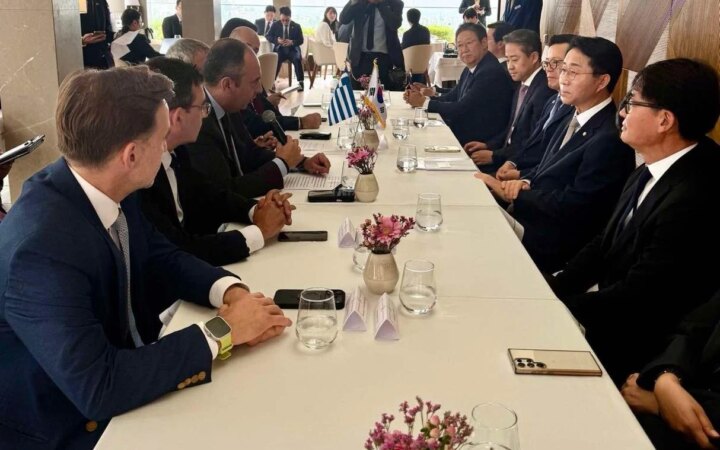
Referring to the Group’s cooperation with Hanwha, he noted that agreements had been signed in Washington and Seoul and that, under Project Trident, a base was being developed in Greece for the construction of submarines, corvettes and offshore patrol vessels (OPVs), as well as ships and platforms for energy production using LNG and, in the future, small modular reactors (SMRs).
“We can become the Southern Pillar of European shipbuilding. In shipping, we are the world’s largest nation in terms of fleet ownership, while Greece also has Europe’s longest maritime borders, which are European borders. We must therefore move from being spenders to becoming productive leaders,” he said.
Three prerequisites for the next step
Despite the progress made, Xenokostas said Greece needed to meet three conditions to make the leap from revival to leadership.
1. Coordination and a unified national strategy
“Shipyards are the extension of shipping on land. We cannot treat them in isolation. We need new, modern legislation and central coordination. Today, eight different ministries are involved in advancing a strategic investment in shipyards. In the US, a dedicated shipbuilding office was established at the White House to drive modernisation. We need a corresponding model of national oversight here,” he stressed.
2. A stable framework and a 15–20-year horizon
“We need a binding, cross-party plan spanning 15 to 20 years, covering both the needs of the Hellenic Navy and commercial shipbuilding, as well as the green transition,” he underlined.
3. Speed and a focus on the future
The third prerequisite is speed. Greece cannot afford to wait two or three years for a permit while international competitors move ahead. Anyone who falls behind after 2030 will be left behind for good. The future of shipbuilding lies in AI, automation and cobotics.
Concluding his remarks, Xenokostas delivered a personal message of gratitude:
“I am deeply grateful to Greek shipowners. Everything we have achieved is thanks to you. We are here because of you. Thank you for everything. Come to us. You know us.”