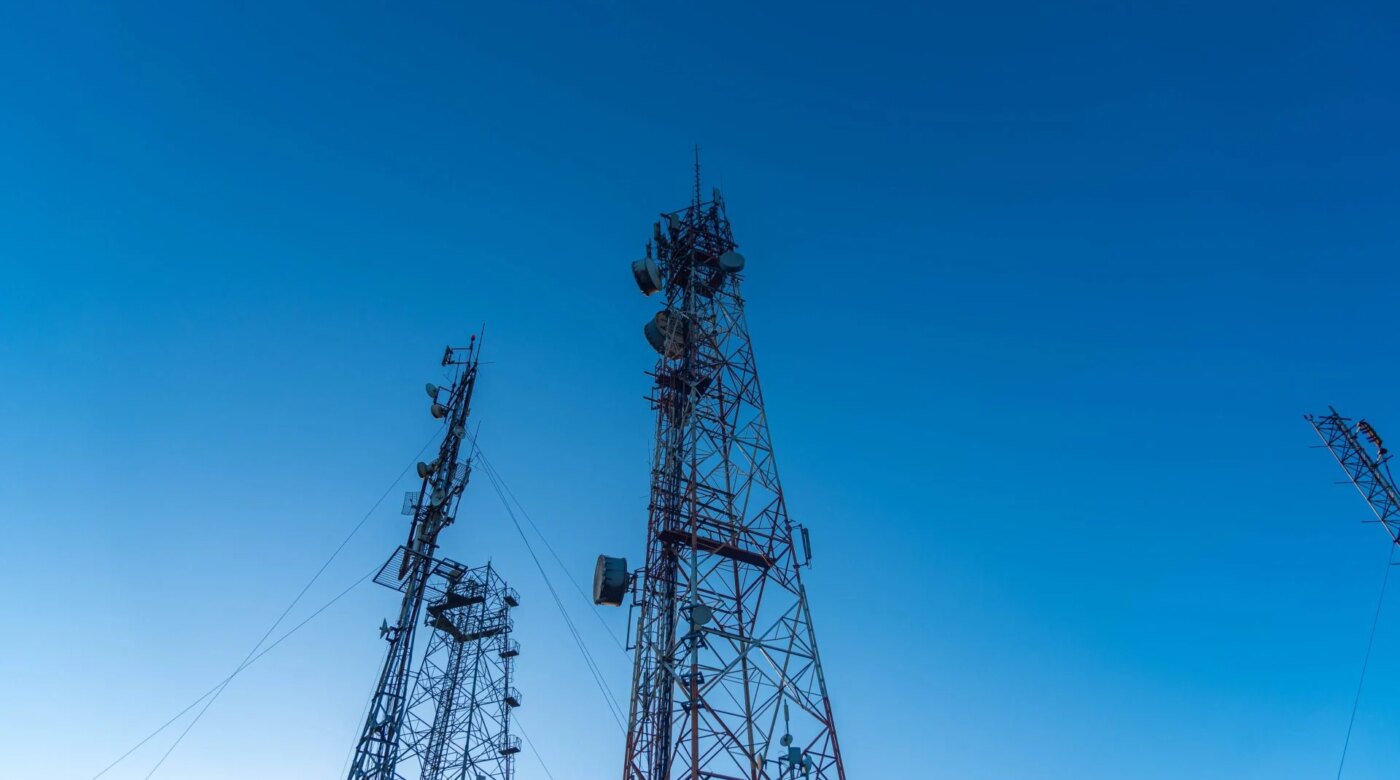
The debate over mergers in the telecommunications sector is re-emerging in Europe, with regulators questioning whether they necessarily lead to higher investment, while operators argue that larger businesses are needed to finance new networks.
The debate has been fuelled by BEREC’s (Body of European Regulators for Electronic Communications) which warns that reducing the number of competitors could lead to higher prices for consumers. The issue is particularly significant as the European Commission reviews its merger control framework. In its draft, presented in April, the Commission proposed giving greater consideration to the impact of mergers on investment and innovation. However, it did not endorse the view that all consolidation is beneficial. Potential economies of scale must be assessed alongside the effects on competition and consumers. The review is scheduled for completion in the fourth quarter of 2026.
BEREC argued that there is insufficient evidence to demonstrate that mergers systematically lead to higher investment. It also maintains that the current rules allow companies to consolidate, provided that this does not create competition concerns.
Connect Europe, the European association representing major telecommunications operators, and the GSMA, the international association of the mobile communications industry, expressed a different view. Both organisations argued that the large number of companies in national markets limits economies of scale and investment returns. Therefore they are calling for a more favourable approach to mergers, enabling operators to secure the financial capacity needed to fund new networks. A similar approach has been advocated in Mario Draghi’s report on European competitiveness.
The GSMA cited a study published in July which found that mobile markets with three operators record investment per connection that is 48% higher than in markets with four operators. The same study identified a positive correlation between mergers and capital expenditure, estimating an increase of 28%-38%.
In its 2026 report, Connect Europe recorded a 2% decline to €64.6 billion in European telecommunications investment in 2024. Investment per capita stood at €118, compared with €217 in the US, €173 in Japan and €151 in South Korea.
Data from the OECD cited by BEREC presented a different picture. In 2023, investment by European operators amounted to 19.6% of their revenues, compared with 18.3% for the US and Canada combined. BEREC also cited studies linking greater market concentration to price increases without corresponding investment benefits. The two sides used different indicators: BEREC examined investment as a proportion of revenue, while Connect Europe emphasised investment per capita.
The Greek market
In Greece, the entry of PPC into the fibre-to-the-home (FTTH) market, serving households and businesses, is an example of a new player intensifying competition. PPC is developing its own network and has already entered the retail market with competitive prices, increasing pressure on incumbent operators.
The possibility of PPC expanding into mobile communications infrastructure also remains open. Taking part in the Hellenic Telecommunications and Post Commission’s (EETT) consultation on the 900 MHz and 1,800 MHz bands, the company stated its intention to bid for spectrum to develop a 5G network through PPC FiberGrid, calling for terms that would facilitate the entry of new operators.
The Greek market has previously tested a four-operator mobile model. Q-Telecom, which launched in 2002 as the fourth operator, did not retain its independence and was integrated into what was then Tim Hellas in 2006. Since then, the market has operated with three mobile networks, now owned by OTE, Vodafone and Nova.
At Nova, United Group, which is controlled by BC Partners, has already sold its 50% stake in Nova ICT as part of a restructuring of its portfolio.
The recent rebranding of its pay-TV service EON as Nova TV is also noteworthy. Market sources link the move to the possibility of a sale of the pay-TV business. According to the same sources, exploratory contacts have taken place and are continuing with companies active in the Greek television market. It remains to be seen whether developments in television form part of a broader strategy by United Group for Nova.
Προτιμώμενη πηγή στην Google
Για να εμφανίζονται περισσότερα άρθρα της Ναυτεμπορικής στις αναζητήσεις σας εύκολα και γρήγορα, πρέπει να προσθέσετε το site στις προτιμώμενες πηγές σας. Μπορείτε να το κάνετε πηγαίνοντας εδώ.