
Old mortgage loans hold the key to reviving retail banking, with changes needed to enable banks to turn the lending taps back on.
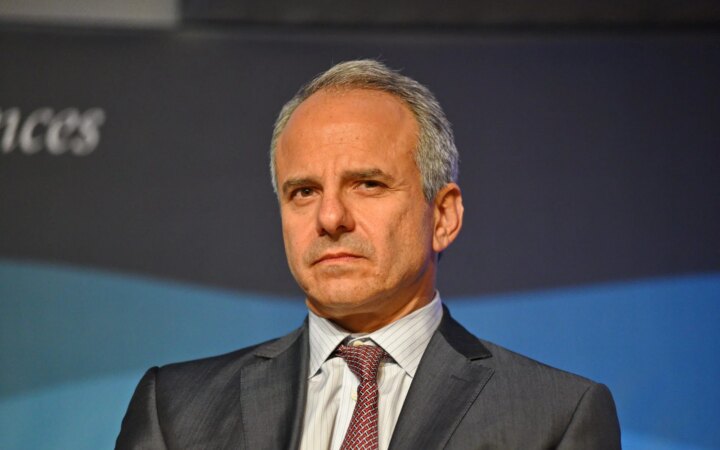
The problem is that a loan may have returned to performing status, yet the borrower remains excluded from the banking market. The broader issue of managing old non-performing loans was highlighted by the International Monetary Fund in its report on the Greek financial system. The issue was outlined by Alpha Bank CEO Vassilis Psaltis, on the sidelines of an event marking the bank’s new corporate identity. He proposed an approach that distinguishes between debts that can be made sustainable again and those for which there is no realistic prospect of repayment.
The latter require social policy intervention. For the former, refinancing must be made possible through tailored solutions and, where necessary, partial debt write-offs. Servicers cannot drive this refinancing process because they lack the balance-sheet capacity of banks to extend new loans. As a result, even when a debt has been restructured or returned to performing status, the borrower does not automatically regain access to new financing.
There are also obstacles to transferring loans back onto banks’ balance sheets. Banks can acquire loans from servicers that have returned to performing status. However, such transactions entail costs, as the requirement to hold provisions for a specified period weighs on the transaction and reduces the bank’s financial incentive.
Supervisory issues
Psaltis raised concerns over supervisory restrictions, arguing that the existing framework does not sufficiently facilitate the refinancing of old debts and borrowers’ return to the banking market. Key issues include the scope for partial debt write-offs even where loans are secured by collateral, as well as greater flexibility in finding new solutions.
However, the issue extends beyond supervisory rules. The European framework requires creditworthiness assessments and prudent evaluation of credit risk. The available evidence does not point to a blanket ban on new financing solely because of a previous default. At the same time, the scope for debt write-offs depends on the applicable legal and contractual framework, as well as on who holds the claim and has the authority to decide on its restructuring.
Credit expansion and international growth
For Psaltis, reactivating retail banking is linked to the broader effort to boost credit expansion. Financing the economy cannot, however, rely exclusively on banks. It requires cooperation with the state, local authorities and businesses, as well as an overall strategy to channel capital into productive investment.
The international expansion of Greek businesses and their ability to secure financing across more markets also play an important role. Alpha Bank’s partnership with UniCredit broadens its capacity to participate in international and syndicated financing, with particular emphasis on small and medium-sized enterprises that have growth potential and can expand beyond the domestic market.
Wealth management is another pillar of Alpha Bank’s growth strategy, as banks seek to increase fee income and offer a broader range of services to clients with more sophisticated investment needs. In this context, Alpha Bank expects to obtain a licence in 2027 to develop private banking activities in Luxembourg. The bank already has a corporate banking presence in the country, with a portfolio reported at €3.5 billion. Its partnership with UniCredit is also a tool for expanding cross-border financing.
The Alpha Bank chief also raised the issue of competition between traditional banks and newer financial platforms, including fintech companies and services linked to cryptocurrencies. As he argued, the goal is not simply to attract a customer, but to provide services that meet their needs and strengthen their long-term relationship with the bank.
New corporate identity
The rebranding unveiled by Alpha Bank is part of a broader effort to redefine its market position at a time when banks are seeking to expand beyond traditional lending and deposit-taking. The new corporate identity aims to reflect the group’s evolution in an environment where digital services, advisory support and wealth management are becoming increasingly important.
Alpha Bank’s new chapter is also reflected in its “Horizons of a New Together” communications campaign, which focuses on the different needs and aspirations of each customer. The bank also announced three initiatives for its employees.
From 1 March 2027, a minimum guaranteed gross monthly salary of €2,300 will be introduced for personal and business financial advisers working across the branch network. The Silver Together programme will provide comprehensive care for employees’ parents. Finally, employees will have opportunities to advance into roles in the bank’s central services without having to relocate to Athens or Thessaloniki.
Προτιμώμενη πηγή στην Google
Για να εμφανίζονται περισσότερα άρθρα της Ναυτεμπορικής στις αναζητήσεις σας εύκολα και γρήγορα, πρέπει να προσθέσετε το site στις προτιμώμενες πηγές σας. Μπορείτε να το κάνετε πηγαίνοντας εδώ.